
What does our city look like to the people who live in it? One photo a day, taken by them
Every day people photograph the street they walk down, the river, the tower at sunset, and the photos stay on their phones. Here is how they reach the whole city instead.
Tomislav Krnic
Founder of the smart city project CityX · 3 min read
Early one morning, on her way to work, a woman walks along the river. The light on the water is the kind she has seen a hundred times and still stops for. She takes a photo. Until now it stayed on her phone, or went to a social network where it was gone by evening.
Every city has hundreds of photos like that a day. The pictures a city shows of itself usually come from a campaign or a brochure, rarely from the people who live there.
The best photo, on the home screen
The Photo of the day service puts one photo on the home screen of the city's app: the best-rated photo of the past seven days, with the name of the place and of the person who took it.
One tap opens the photos full screen, newest first, the way people already scroll on their phones. Each photo says who took it, when, and how others have rated it.
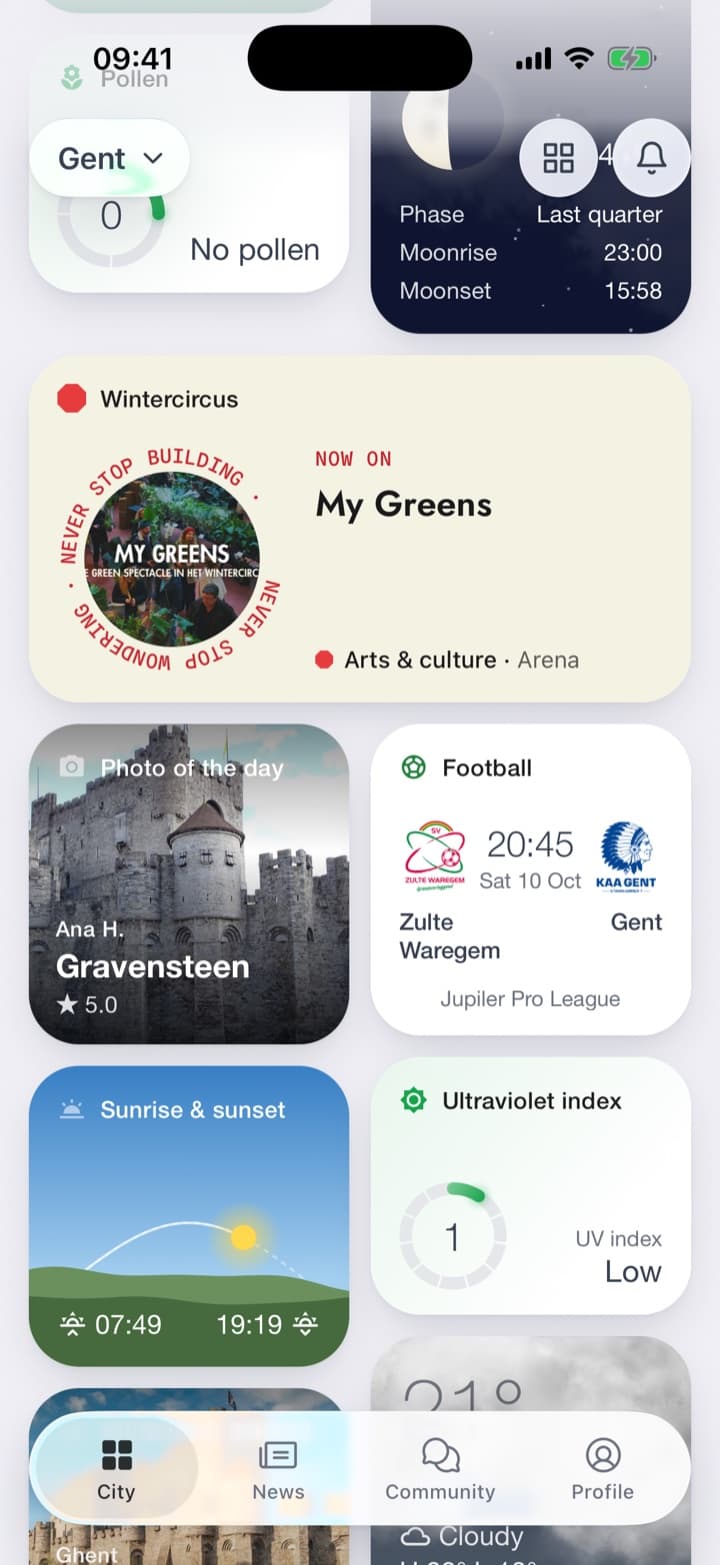
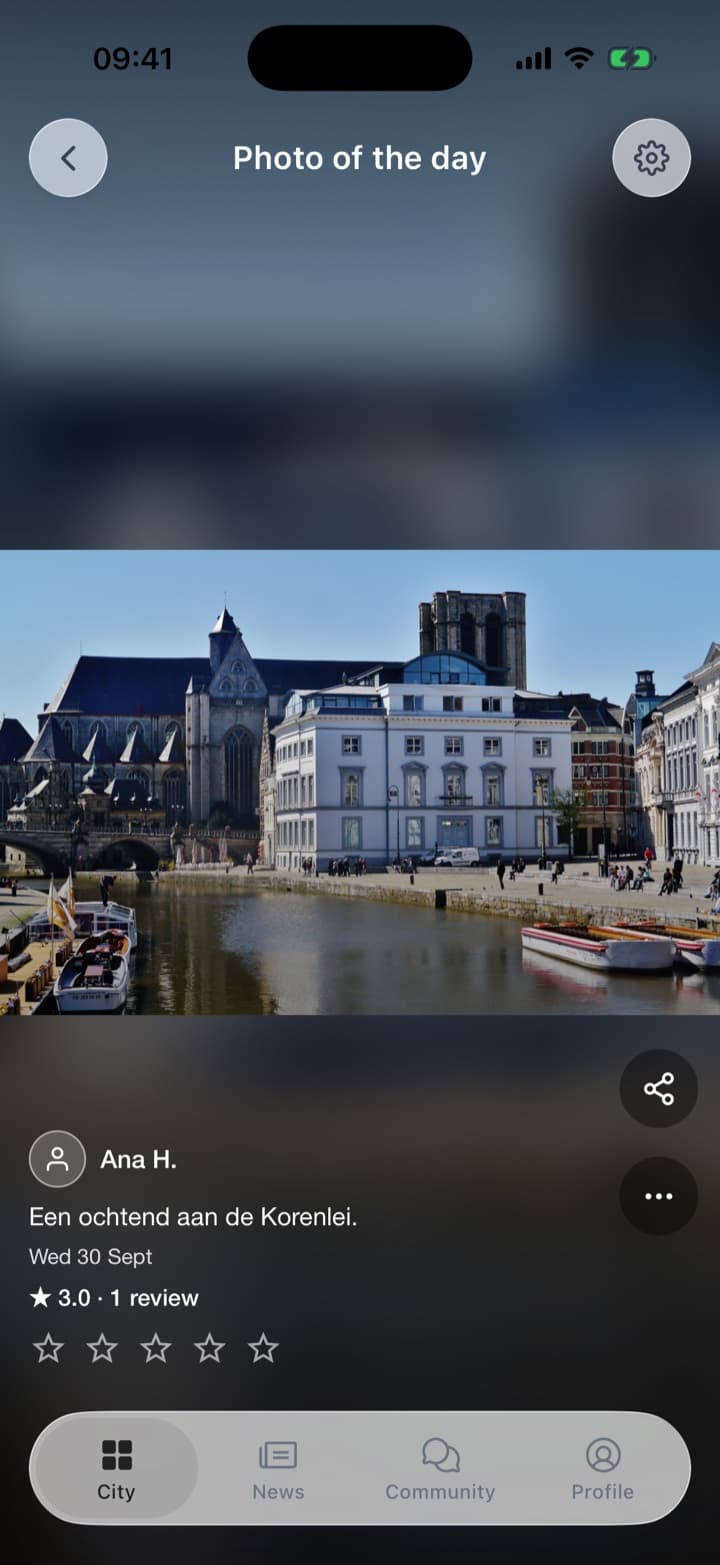
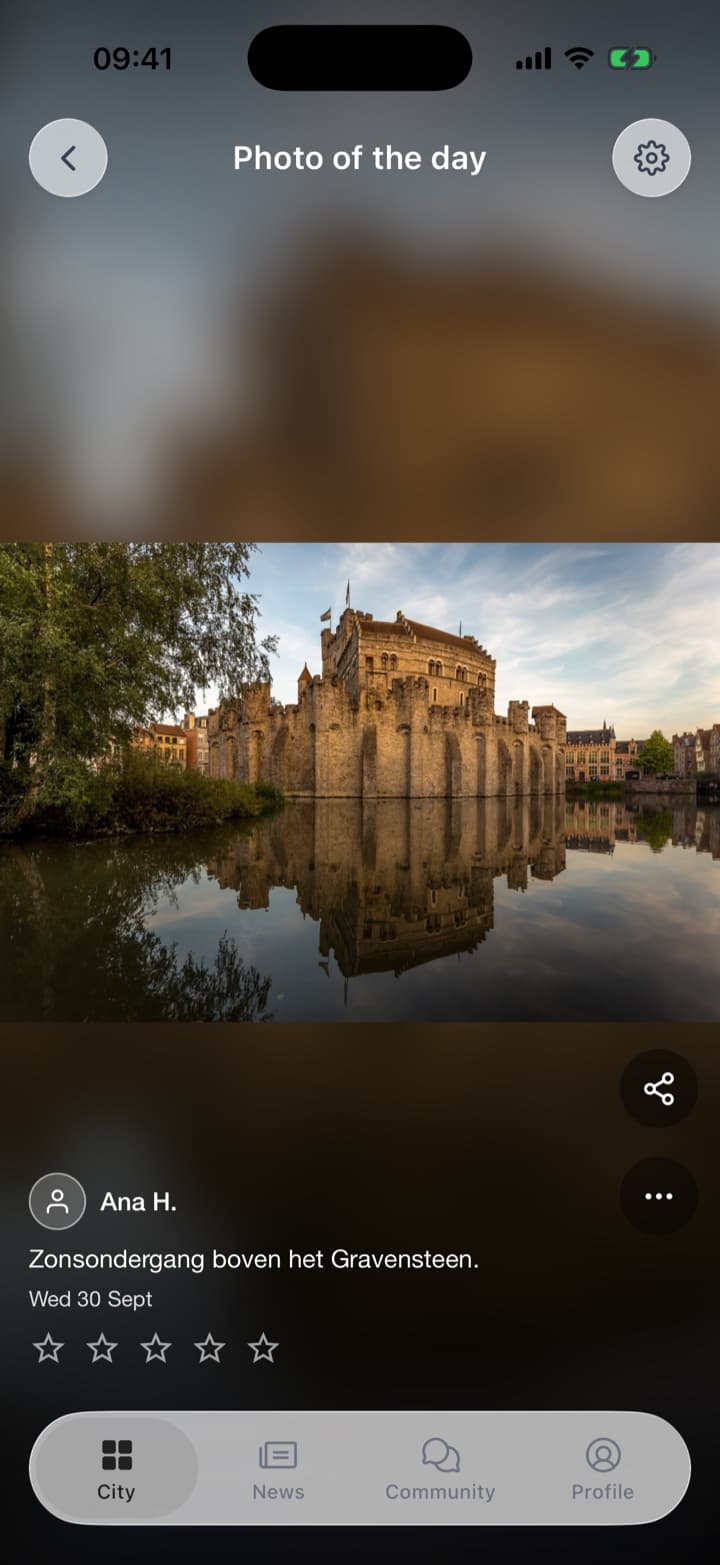
Under each photo there are five stars. Anyone can rate what they see, except their own photo, and the ratings decide which photo of the past seven days the whole city finds on its home screen.
Anyone can add one
Adding one takes a tap on Add photo, then the camera or the gallery; a description and the place are optional. The photo appears straight away, under the person's own name. Behind every photo there is a real, signed-in person.
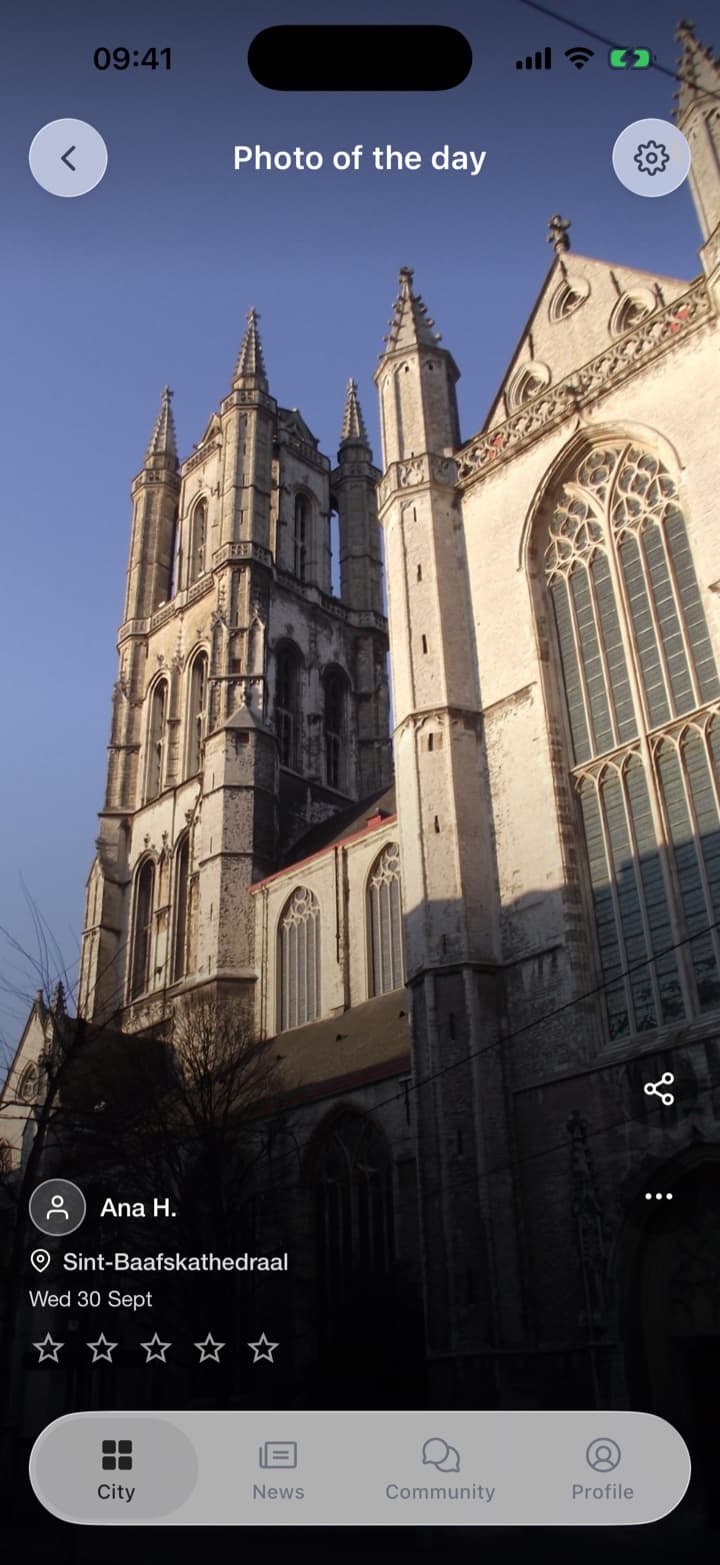
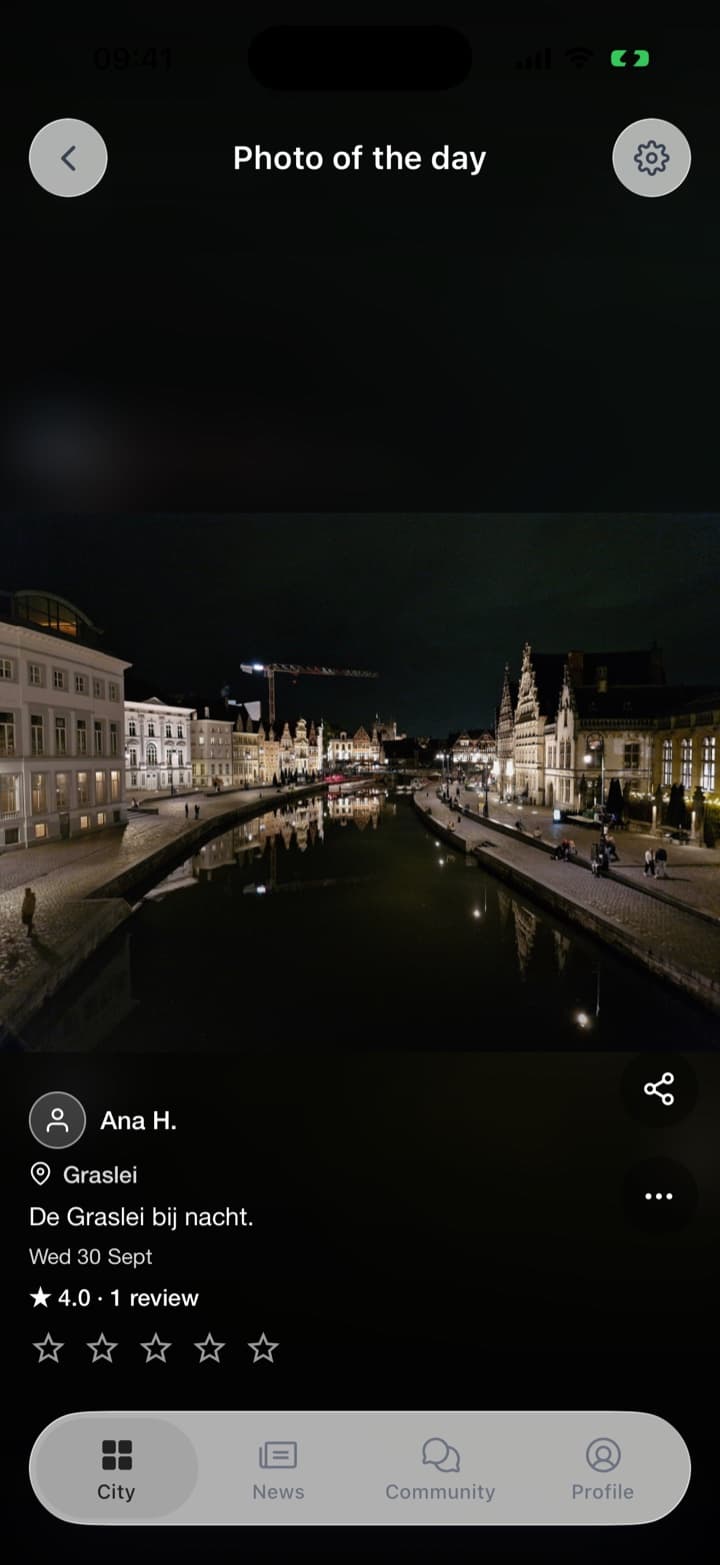
Over the weeks the service fills with the places residents pass every day: the Saturday market, the first snow on the square, the river at dusk. People find corners of their own city they had never noticed.
Not everything people share belongs there. Behind the three dots on every photo, anyone can report it, hide a person whose photos they no longer want to see, or delete their own. A photo that three people report disappears by itself. The city sees everything that is shared and removes what does not belong.
What it takes
A decision to let citizens share their photos, and someone at the city who looks at what they share, the way someone already reads the comments on the city's own pages. There is nothing to prepare: on the first day the service invites residents to share the first photo of their city.
The first photos come sooner when the city asks for them on its own channels. After that, every day, the city sees itself on the home screen through the eyes of the people who live in it.